
Zuckerberg is awkward. But he shows up.
You don't have to like Mark Zuckerberg to learn from him. Watch him speak and you'll see someone who's, very clearly, not at ease. He hesitates. He stiffens up. He makes jokes that don't land. But, to his credit, he still shows up.
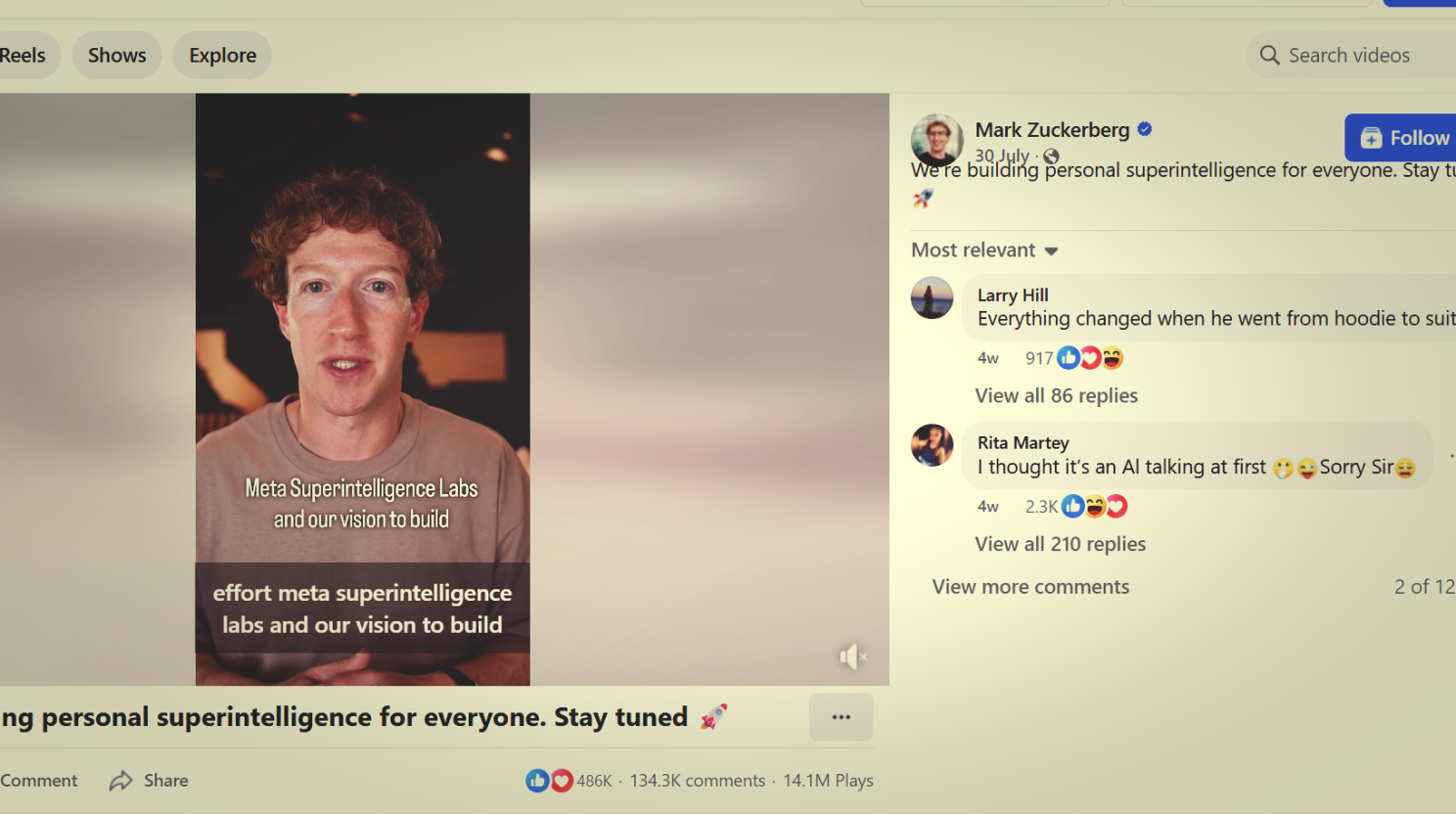
His video on Meta's superintelligence vision is a good example. There's a lot I could focus on. It's short. It's shot in an intimate, personal style. He leads with the big-picture mission.
But what stuck with me was this: midway through, he stumbles over his words. The delivery is bumpy. You can tell it doesn't come naturally.
So, if you're a CEO or senior exec, that might make you pause. If this isn't his strength, why do it? Is the awkwardness worth it? I think it is, and here's why.
Why should CEOs be visible?
Because being visible is part of the job. Zuckerberg seems to have figured out that leading from the front isn't optional, and if you avoid visibility, you're wasting one of the biggest marketing and PR levers in your business.
You're the face of the company. And, if you're not part of the conversation in your sector, your company isn't either.
Journalists want a named person to quote. Investors want to know who's steering the ship. Customers and potential hires want a sense of the people behind the logo.
More and more, people also ask AI about a company before they ever visit its website. The answers draw on what's already out there in public. A CEO who has spoken, written and been interviewed gives those tools something to work with. A CEO who has stayed silent leaves the gap for somebody else to fill.
Why do people want to hear from the CEO rather than the brand?
People want to hear from the CEO because it's simply more interesting. A statement from legal or a polished brand video won't land the same way, and we should stop pretending otherwise.
When a CEO speaks, people click, and the message lands. Part of that is authority, because the person in charge is the one who can actually explain a decision and stand behind it. Part of it is plain curiosity. We want to know who's making the calls and how they think.
Brand content has a place. But it's very hard to build trust with a logo. Trust tends to attach itself to people, and the more a leader is willing to put their name and face to what the company says, the more weight it carries.
How has Zuckerberg's approach to visibility changed?
Not so long ago, Zuckerberg barely spoke. Now he's present and visible, if sometimes awkward.
I remember when he gave evidence to the US Senate in 2018. It was a huge moment precisely because we so rarely heard from him. For years, he'd let the product, the press office and the brand do the talking. When he finally sat in front of lawmakers, the world tuned in.
Now? He's posting videos, sitting down for long-form interviews and talking openly about where Meta is heading. He's present. Sometimes awkward, often stiff – but there. And that matters. People want to hear from the person in charge. Not the comms team.
And Zuckerberg has stepped into that space even when it's uncomfortable. That's what visible leadership looks like in practice.
People forgive awkward. They don't forgive absence.
What should CEOs take from Zuckerberg's example?
Show up, speak plainly, and don't worry too much about the delivery.
The lesson isn't 'be like Zuckerberg'. Most leaders will never want a profile like his, and nor should they. But in my experience, plenty hold back because they think they need to be polished first, with the perfect script and the confidence of a seasoned broadcaster. That bar is too high, and waiting to clear it means staying silent.
Audiences are far more forgiving than most executives think. What they notice is who's there and who isn't.
People forgive awkward. They don't forgive absence.
Keep reading. It's free
- Why do people want to hear from the CEO rather than the brand?
- How has Zuckerberg's approach to visibility changed?
- What should CEOs take from Zuckerberg's example?
2 more minutes to read.
Read by 2,400+ comms leaders & journalists. No spam, ever. One click to unsubscribe.